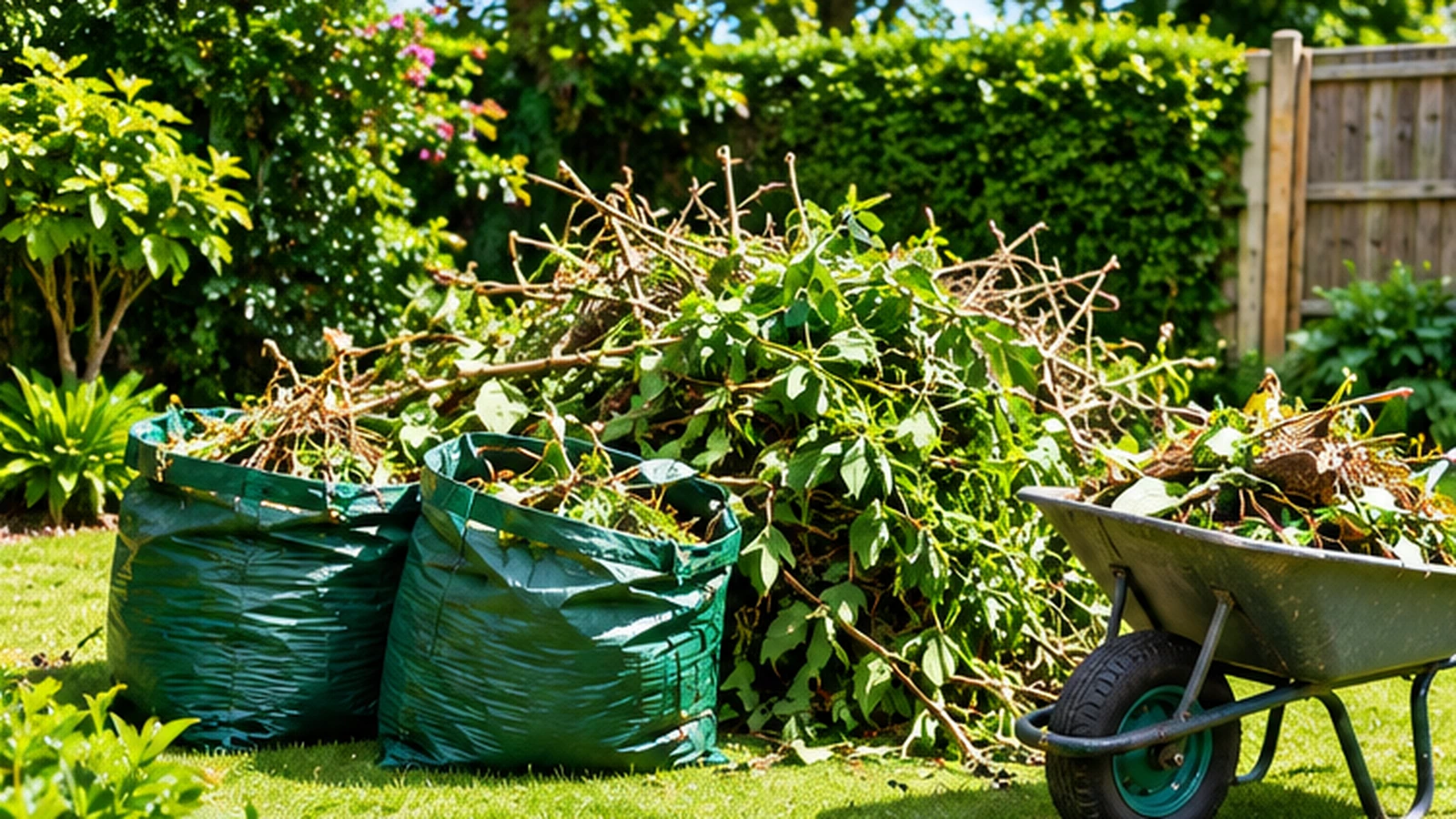
Garden Waste Removal
Branches, trimmings and suitable green waste from residential gardens.
Learn more →
LOCAL · RELIABLE · AFFORDABLE
Practical rubbish clearance for homes and businesses in Ealing W5. From one bulky item to a larger property clearance, tell us what needs collecting.
OUR SERVICES
Branches, trimmings and suitable green waste from residential gardens.
Learn more →


Sofas, wardrobes, tables and other bulky furniture collection enquiries.
Learn more →CLEAR & TRANSPARENT
Published prices include tax and are based on the volume and weight of waste collected. Loading time, weight limits and accepted waste types apply. Request a tailored quotation for your job.

Rubbish removal and garden waste disposal
| Load | Loading | Cu yd | Max weight | Bin bags | Price |
|---|---|---|---|---|---|
| Minimum | 10 min | 1.5 | 100-150 kg | 8 | £90 |
| 1/4 Load | 20 min | 3.5 | 200-250 kg | 20 | £160 |
| 1/2 Load | 40 min | 7 | 500-600 kg | 40 | £250 |
| 3/4 Load | 50 min | 10 | 700-800 kg | 60 | £330 |
| Full Load | 60 min | 14 | 900-1100 kg | 80 | £490 |

Rubbish removal and garden waste disposal
| Load | Loading | Cu yd | Max weight | Bin bags | Price |
|---|---|---|---|---|---|
| Minimum | 10 min | 1.5 | 100-150 kg | 8 | £90 |
| 1/4 Load | 40 min | 7 | 400-500 kg | 40 | £250 |
| 1/2 Load | 60 min | 12 | 900-1000 kg | 80 | £370 |
| 3/4 Load | 90 min | 18 | 1400-1500 kg | 100 | £550 |
| Full Load | 120 min | 24 | 1800-2000 kg | 120 | £670 |
CLEARANCE EXAMPLES


HOW IT WORKS
Share the items to remove, approximate volume, postcode and access information.
We assess your request against the type of waste and the applicable load band.
Confirm the available collection arrangements with the assigned provider.
CUSTOMER FEEDBACK

★★★★☆Great value with an obvious care for the environment. Communication was prompt and reliable, and the team was both punctual and efficient. Absolutely recommend.
★★★★★My go-to company for clearing rubbish and discarded items from clients. They always provide fast, dependable service at good prices. No need to search further. Very satisfied.
★★★★★Two friendly workers from Rubbish Removal Company Ealing dealt with my old, heavy mattress swiftly and safely. Great experience!
★★★★☆Excellent efficiency, polite staff, and speedy delivery of services.
★★★★★Exceptional service from a warm and welcoming team. Called yesterday, and they finished the job today at a great price.
★★★★★The team made house clearance hassle-free - they worked fast, kept everything neat, and provided service at an excellent price.
★★★★☆There was a large volume of old office furniture to remove after a renovation. The team conducted themselves very professionally, arrived exactly on schedule, and cleared everything with minimal interruption. They handled all the tough work and tidied up the space nicely.
★★★★☆Expertly dealt with a sensitive situation with compassion and unwavering efficiency. Communication with all parties was spot-on. I highly endorse them.
★★★★★I contacted this team for urgent waste removal after a shed clear-out. Moving house and work kept me too busy to do it myself. They showed up punctually and removed all rubbish and recycling from the driveway as I had asked.
★★★★☆I had a supportive experience with customer service for my inquiries. Rubbish removal was effective and timely.
YOUR QUESTIONS ANSWERED
Published Tipper Van and Luton Van minimum-load prices start at £90 including tax. The total depends on the volume and weight of the waste, the applicable load allowance and the job details. Check the full price tables for each van type.
The two vans have different published volume, weight and loading-time limits. Tipper Van loads range from 1.5 to 14 cubic yards; Luton Van loads range from 1.5 to 24 cubic yards. The right option depends on the waste and collection arrangements.
These are available service enquiry categories. Describe the items before booking so that suitability, restricted materials and the collecting contractor's requirements can be checked.
Short-notice collection may be possible, subject to contractor availability, waste type and property access. We cannot guarantee a same-day slot before confirming arrangements.
Tell us the waste type, approximate volume, W5 collection postcode, and whether there are stairs, lifts, parking restrictions or other access issues. Photos can help with mixed or bulky loads.
Bookings are coordinated with independent waste contractors. Carrier registration is checked and appropriate paperwork, including a Waste Transfer Note where legally required, must be provided by the collecting contractor.
Rubbish Removal Ealing provides a straightforward clearance service for households and businesses that need unwanted items taken away in an organised way. From general household rubbish to bulky furniture, garden waste and light commercial clearances, the focus is on removing materials carefully and leaving spaces ready for their next use. If you are looking for a practical rubbish removal service in Ealing, this page outlines the main options and how the work is usually arranged.
Different jobs call for different approaches, so the service is best understood as a set of related clearance tasks rather than one one-size-fits-all job. Some customers need a room emptied after a move, others want a single item lifted from a flat, and others need a fuller clearance for a property, garage or office. Our approach is to match the collection to the material type, access and volume, then remove it with as little disruption as possible.
For a clear idea of what can be handled, start with the main service pages and compare the areas that matter to you. Small collections, mixed loads and more involved clear-outs all need a sensible plan, and the right page can help you see which type of clearance is most relevant before you request a quote. If you already know what needs removing, you can move straight to an enquiry and outline the items in plain terms.
Household clearance often includes general rubbish, broken items, worn-out furniture and objects that have built up over time in spare rooms, cupboards or hallways. It may be a single room or a fuller property clearance, but the aim is the same: to remove items without leaving the customer with a confusing or drawn-out process. Where useful, this can be combined with house clearance in Ealing for larger domestic jobs that involve multiple item types.
When planning a domestic collection, it helps to think about what is staying, what is being moved elsewhere and what must go. A short list is often enough, especially if the items are easy to identify. Photos can also help, but they are most useful when they show the full pile, the access route and any awkward pieces rather than close-up details alone. Clear information supports a more accurate quotation and reduces the need for guesswork on the day.
Common household removals may include furniture, mattresses, bagged rubbish, old appliances, boxed clutter and mixed waste from cupboards, loft spaces or sheds. Some items are light but awkward, while others are simply heavy or difficult to move through narrow hallways. The right clearance plan takes account of weight, breakability and access, so the work can be carried out efficiently and with care around walls, floors and shared entrances.
Large items need a different approach from everyday rubbish because the challenge is often size rather than quantity. Sofas, wardrobes, bed frames, cabinets and other bulky pieces may need careful lifting and dismantling before removal. For customers who mainly want individual pieces taken away, furniture disposal in Ealing can be the most direct option, especially when one item is too awkward to handle alone.
Bulky-item removal is also useful when a property is being rearranged rather than fully cleared. One room may be finished, but the remaining furniture no longer suits the space. In those cases, the work can focus on the specific pieces that are no longer wanted instead of treating the whole property as a clearance project. That keeps the task proportionate and avoids unnecessary disruption to the rest of the home or workplace.
Where dismantling is involved, it is sensible to mention whether items are already taken apart or still assembled. That distinction can affect loading time and the way access is managed, particularly in flats, shared stairwells or compact homes. The more precisely the load is described, the easier it is to choose the right collection method and prepare for the removal itself.
Outdoor rubbish can build up quickly after pruning, landscaping or seasonal tidying, and it often consists of mixed materials rather than a single waste type. Branches, hedge cuttings, soil, old planters, broken fencing, bags of green waste and redundant garden furniture can all need removing together. A dedicated garden waste removal service in Ealing is useful when the outdoor area needs clearing without leaving sacks and debris stacked up afterwards.
Garden clearance works best when the waste is grouped sensibly before collection, but it does not need to be over-prepared. A brief note about what is stacked, what is loose and whether any items are particularly heavy helps the job run smoothly. If there are thorny cuttings, wet soil or broken containers, those details are worth mentioning as they affect handling and loading. Practical information is more useful than long explanations, especially when the work involves varied outdoor materials.
Not every garden job is the same. Some customers want a full tidy-up after a renovation or shed clear-out, while others only need a few bags removed after routine maintenance. The service can be tailored to the amount of material present, which means the collection can stay focused on the actual job rather than becoming a broad and unnecessary clear-out of the whole outdoor space.
Commercial clearances need to respect access, timing and the working environment, especially when items are being removed from an office, retail unit or shared premises. Desks, chairs, filing cabinets, shelving, packaging, display materials and redundant stock may all need to go in one coordinated visit. For workplaces that need a more structured removal, office clearance in Ealing offers a focused route for business customers.
A workplace collection usually benefits from a short inventory rather than a vague description. Knowing what stays on-site, what should be taken from each floor and whether the items are upstairs, in storage or behind a counter helps keep the enquiry efficient. Where access is shared with staff, customers or other tenants, it is also sensible to note any restrictions so the clearance can be planned around the building rather than forcing the work into a poor schedule.
Some commercial jobs are simple strip-outs of a few pieces, while others involve a broader turnover of furniture and waste as a unit changes hands. In both cases, the useful question is not how much there is in the abstract, but what has to be moved, what can be separated and what may need special handling because of size or weight. That detail keeps the service practical and avoids unnecessary confusion.
Ealing is a large district in West London, historically associated with Middlesex and now part of the London Borough of Ealing. It is known for a mix of residential streets, town-centre activity and quieter green spaces, with Ealing Broadway acting as a major focal point for shopping, travel and everyday life. The area has long been shaped by transport links, including the arrival of railways that helped turn it from a more rural settlement into a suburb with stronger commuter connections to central London. Alongside the busy commercial core, Ealing retains a varied built environment that includes Victorian and Edwardian housing, interwar streets and later redevelopment around transport corridors.
Property type often shapes the way rubbish removal needs to be handled. A ground-floor house with driveway access is very different from a top-floor flat with narrow stairs, and a storage unit or shared office building introduces yet another set of considerations. The service can adapt to those differences by matching the removal method to the setting, which helps keep the work efficient and realistic. For customers who are not sure what category fits best, the broader rubbish collection in Ealing page is a useful starting point.
In practice, the most helpful details are usually the simplest ones: the type of property, the floor level, whether parking is available nearby and whether items are already assembled in one place. That information gives a better picture of the job than general statements about needing a clearance. If there are several separate piles, or if the waste is spread across rooms, saying so at the outset makes it easier to plan the order of collection and the amount of time required.
Pricing for rubbish removal is usually shaped by a small number of practical factors rather than a single fixed idea of a job. Volume, weight, access, waste type and loading complexity all affect the overall scope. A few heavy items in an easy location may be simpler than a larger-looking pile spread across several rooms. If you want to understand the basis for charging before you enquire, the pricing and quotes page gives a sensible place to start.
When requesting a quotation, keep the description factual and concise. A list of items, a rough count of bags or boxes and a brief note about access are usually enough to start the conversation. If you already know that the work involves mixed waste, furniture or garden material, say so clearly. The goal is not to write a long explanation; it is to provide enough information for a practical estimate without leaving important details out.
Ready to move forward? Send the details of the items you want removed and ask for a quotation. If you have a clear collection list, that is often the best place to begin, and it helps keep the process simple from the first reply onwards.
Good rubbish removal is not only about lifting and loading; it also depends on how different materials are separated and handled afterwards. Mixed loads may contain reusable items, recyclable materials and general waste, and each category needs to be dealt with appropriately. Where the job includes items that can be sorted away from the rest, a structured approach helps reduce unnecessary mixing and keeps the clearance more orderly. The recycling and sustainability page outlines this side of the service in more detail.
Customers do not need to organise everything into perfect categories before the collection, but a little thought can help. For example, keeping loose recyclables apart from damp or broken waste can make the load easier to assess, while separating clearly reusable furniture from general rubbish can be helpful if the job includes multiple material types. This is less about creating extra work and more about making the collection sensible from the outset.
If you have items that are unusual, fragile or potentially unsuitable for a standard load, mention them early. That may include old paint tins, electricals, sharp scrap or mixed debris from a refurbishment. The more accurately the waste is described, the better the collection can be matched to the material and the more straightforward the quotation process becomes.
There are several related clearance pages because customers often need a different starting point depending on the job. A general rubbish collection, a furniture-only removal, a house clearance or a garden waste job may all involve similar lifting, but the planning and the material type are not always the same. If you are comparing options, the services overview page helps set out the broader range without forcing every enquiry into one category.
The main practical point is to choose the closest match to the job you actually need done. A clear match keeps the description accurate and avoids unnecessary back-and-forth. If your load is mostly one material, choose the page that reflects that. If it is mixed, start with the general rubbish page. If it relates to a particular property type or setting, such as an office or a garage, pick the page that best reflects the real job rather than the broadest possible description.
That approach also makes the request easier to process when the collection involves more than one location on the same site. For instance, a home may have rubbish in the loft and garden waste outside, or a workplace may have both office furniture and packaging to remove. In those cases, one enquiry can still cover the full scope, provided the details are set out clearly enough for the work to be understood.
If you need rubbish taken away in Ealing, the most useful next step is to describe the items, the access and the setting in a few straightforward lines. That is usually enough to begin the quotation process and help the right collection option be identified. Whether the job is domestic, commercial or a mixed clear-out, the aim is to keep the arrangement practical and proportionate to the work that actually needs doing.
For larger or more specialised jobs, it can also help to mention whether any items are already grouped together, whether anything needs dismantling and whether there are tight staircases, limited parking or shared entrances. Those details are not a burden; they simply make the planning more accurate. If you are unsure which service page is the closest fit, use the general rubbish page as a starting point and outline the load from there.
To request a quotation, send your details and ask for a clear price based on the items you want removed. Contact us here for a quotation when you are ready to move ahead, and include enough information for the job to be understood properly.